Why Some Asians Say “Chinese New Year” and Others Say “Lunar New Year”
- 88tumble
- Feb 17
- 3 min read
Some Asians say Chinese New Year and others say Lunar New Year because they’re talking about different things: one is a specific Chinese festival, the other is an inclusive term for many cultures that follow lunar or lunisolar calendars. The wording has become a live debate around history, identity, and how to respectfully describe a holiday shared across Asia and the diaspora.
Chinese New Year vs. Lunar New Year: What’s the Difference?
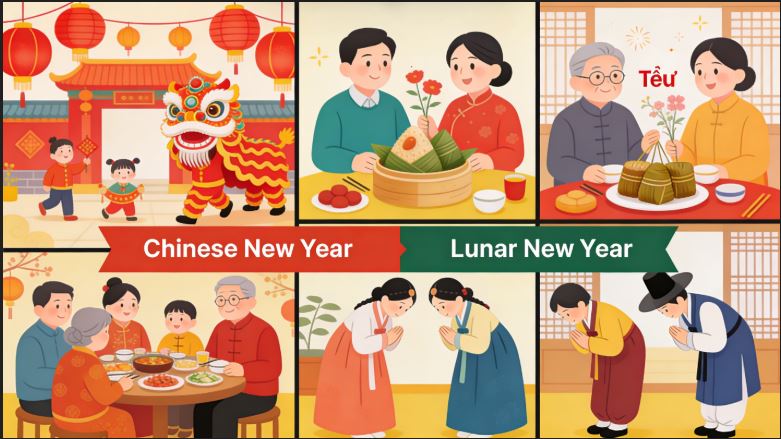
“Chinese New Year” usually refers to the Spring Festival (Chunjie), the new year celebration rooted specifically in Chinese culture, history, and customs. It features zodiac animals, red envelopes, lion and dragon dances, and family reunions tied to Chinese beliefs and legends like the monster Nian.
“Lunar New Year” is a broader term that covers all new year celebrations based on lunar or lunisolar calendars, including but not limited to Chinese New Year. It can include Vietnamese Tết, Korean Seollal, Tibetan Losar, Mongolian Tsagaan Sar, and more, each with its own name, rituals, and symbolism.

Key point
Chinese New Year = specifically Chinese Spring Festival traditions.
Lunar New Year = umbrella term for multiple cultures’ lunar new year observances.
Who Says “Chinese New Year” and Who Says “Lunar New Year”?
Different communities use different terms depending on culture and context.
Many Chinese communities (in China, Singapore, Malaysia, and overseas) say “Chinese New Year” or “Spring Festival” because they’re celebrating a distinctly Chinese holiday.
Vietnamese communities celebrate Tết Nguyên Đán and often prefer “Tết” or “Lunar New Year,” not “Chinese New Year,” to reflect their own national tradition.
Koreans celebrate Seollal and similarly distinguish it from Chinese customs, even though the date and calendar are related.
Tibetans, Mongolians, and others also have their own names and practices, sometimes grouped under “Lunar New Year” in multicultural settings.
In Western countries, schools, governments, and brands increasingly use “Lunar New Year” to be more inclusive of non‑Chinese Asians who celebrate on the same calendar date.
Why the Terminology Matters: Inclusivity vs. Cultural Specificity
The debate isn’t just semantics; it’s about who feels seen and accurately represented.
Arguments for “Lunar New Year”
It recognizes that Korean, Vietnamese, Tibetan, Hmong, and other communities also celebrate a lunar new year, often with very different traditions.
It avoids erasing non‑Chinese identities by lumping their holidays under “Chinese.”
It fits multicultural festivals in cities like San Francisco, Toronto, and Sydney, where many Asian groups celebrate together.
Arguments for “Chinese New Year”
The Spring Festival and the zodiac system have Chinese historical origins, and many feel the Chinese roots should be named clearly.
Some Chinese people worry that replacing “Chinese” with “Lunar” erases their culture or downplays China’s role in shaping the holiday.
Linguistically, Chinese communities are celebrating their specific festival, not an abstract “lunar event.”
This tension shows up every year online and in diaspora spaces, where people argue about whether one term is more “correct,” respectful, or political.
Examples of How Different Cultures Celebrate
Even when they share a date, celebrations are not identical.
Chinese New Year (Chunjie): 15 days of festivities, red decorations, zodiac animals, reunion dinners, firecrackers, and red envelopes.
Tết (Vietnam): ancestral altars, bánh chưng/bánh tét, visiting elders, and lucky money, with Vietnamese zodiac variations like the cat instead of the rabbit.
Seollal (Korea): bowing rituals (sebae), wearing hanbok, eating tteokguk, and folk games over a three‑day holiday.
Losar (Tibet) and Tsagaan Sar (Mongolia): Buddhist rituals, special offerings, white foods, and unique greetings.
Using “Lunar New Year” acknowledges this diversity, while “Chinese New Year” accurately names just one of these festivals.
When to Use Which Term (And Why the Debate Isn’t Going Away)
A practical way to navigate the debate is to match the term to the context.
Talking specifically about Chinese traditions, zodiac stories, and Spring Festival customs → “Chinese New Year” fits.
Referring to multi‑cultural celebrations or speaking broadly about all the different Asian new years tied to the lunar calendar → “Lunar New Year” is more accurate and inclusive.
When in doubt, asking people or communities which term they prefer is a simple way to show respect.
As more brands, schools, and media outlets adopt “Lunar New Year,” some Chinese voices push back to protect the visibility of their specific festival. The result is an ongoing conversation about language, power, and how to honor both shared traditions and distinct identities across Asia.
Explore more about the Asian American Experience on 88tumble.com/explore